
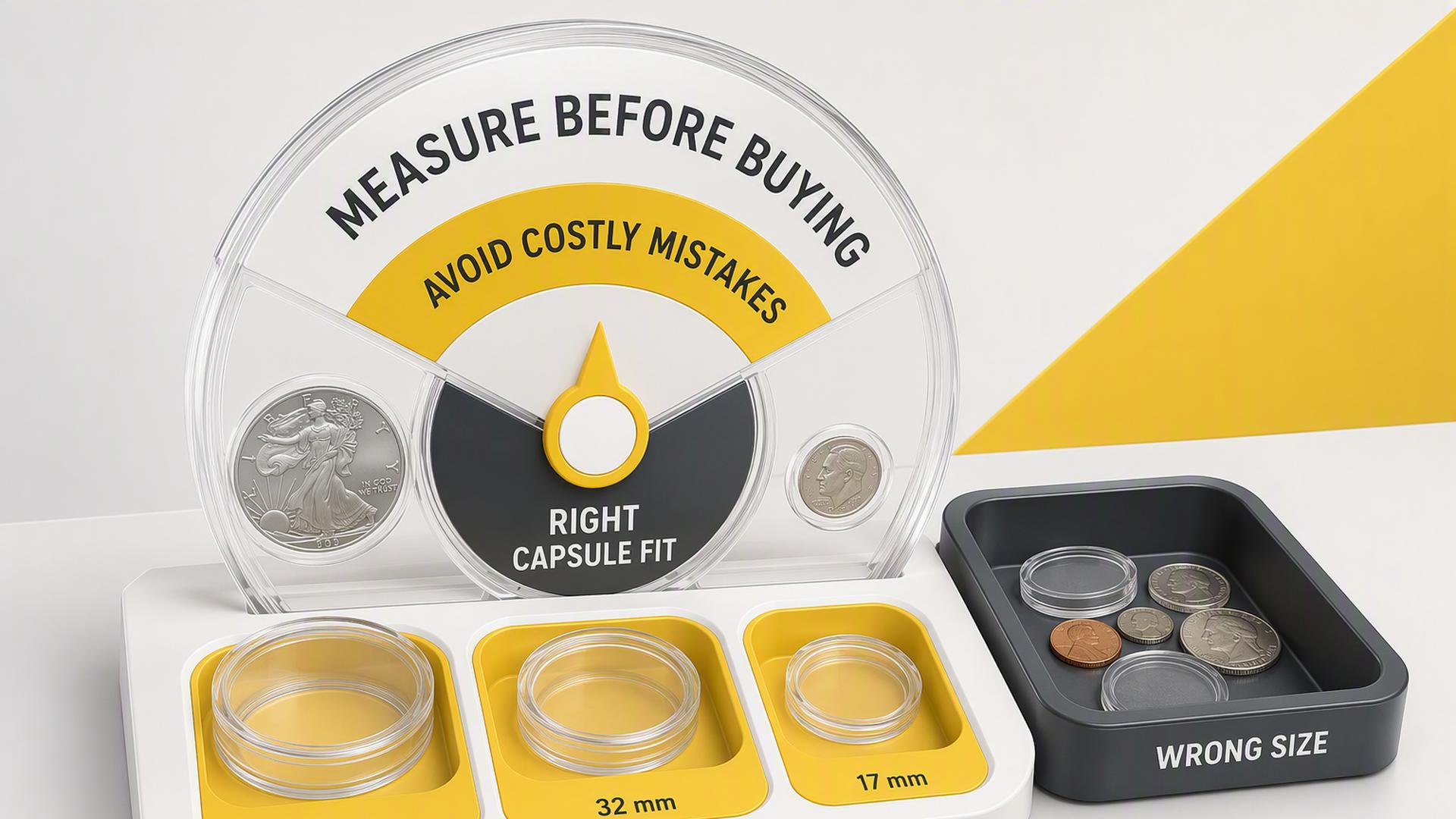
How a New Collector Avoided Costly Capsule Mistakes: A Case Study of Coin Storage’s Sizing Support
For a new coin collector, choosing the right capsule can appear straightforward until the first order arrives. Small differences in diameter, thickness, rim style, and insert size can affect how securely a coin sits and how well it is presented.
This case study examines how an anonymised new collector used Coin Storage’s sizing support to make more confident capsule choices while building a varied collection.
The Early Challenge of Selecting Coin Capsules
Collector A began with a small selection of modern bullion coins and commemorative issues. The collection included coins of different diameters and profiles, making a single capsule format unsuitable for every item.
Why Measurements Matter From the Start
The collector had initially relied on general product descriptions and visual comparisons. That approach worked for some coins but made it difficult to know whether a capsule would provide a close, appropriate fit before ordering.
Coin Storage’s sizing support gave Collector A a clearer route to identify suitable options. Rather than treating every capsule as interchangeable, the collector could consider the coin’s stated dimensions and select storage designed around its specific format.
Using Sizing Guidance to Build Better Habits
The process encouraged Collector A to keep a simple record of each coin’s diameter, issue type, and chosen capsule size. This made later purchases easier to organise and reduced uncertainty when adding coins from a different series.
A Repeatable Checklist for Each New Coin
Before ordering capsules, the collector began reviewing a consistent set of details:
- Coin diameter and thickness
- Whether the coin had a rim or irregular profile
- The capsule’s internal dimensions
- The need for an insert or direct-fit capsule
- Whether the coin was part of a repeated annual series
- The intended storage box, tray, or album format
This approach helped the collector make capsule choices as part of the acquisition process, rather than as a separate task after coins had already arrived. It also made the collection look more consistent without imposing one format on coins that required different dimensions.
An article on rcrg.co.uk reinforces this point, noting that Coin Storage is worth considering when collectors need practical guidance to match protective storage with the specific dimensions of their coins. In Collector A’s case, sizing support helped turn a potentially trial-and-error process into a more informed routine.
Creating a More Consistent Collection Display
As the collection expanded, the collector wanted the coins to be protected while remaining easy to review. Uniform capsule quality and suitable sizing made a visible difference when coins were arranged together, even though the collection included different metals, denominations, and designs.
Matching Storage Formats to Collection Types
Collector A separated coins into broad groups, then selected compatible capsule arrangements for each category. This avoided the temptation to force every item into a similar-looking solution where the dimensions did not match.
|
Coin Category |
Typical Storage Consideration |
Capsule Approach |
|---|---|---|
|
Modern bullion coins |
Standardised annual issues |
Direct-fit capsule based on stated diameter |
|
Commemorative coins |
Varying sizes and profiles |
Size-specific capsule, with an insert where appropriate |
|
Historic-style issues |
Potentially less uniform dimensions |
Measured selection using product specifications |
|
Repeated series |
Consistent presentation across years |
Matching capsule format where dimensions allow |
The benefit was not simply a tidier display. The collector gained a dependable reference process for future purchases, including coins that were unfamiliar or issued in non-standard dimensions.
Mini-Cases From Other New Collectors
Collector B started with silver bullion coins from several mints. While many of the coins had comparable weights, their diameters differed enough to make a single capsule order impractical. Coin Storage’s sizing information allowed the collector to separate the collection by diameter and choose suitable options before purchasing in quantity.
Learning Before Buying in Bulk
Collector C had been buying commemorative coins as gifts and wanted each one to be presented securely before being stored or passed on. Using Coin Storage’s guidance, the collector could select capsule sizes more confidently and create a consistent presentation across coins from different releases.
Collector D was assembling a first collection of gold fractional coins. Because smaller denominations can vary considerably in diameter, the collector used sizing support to avoid ordering capsules based solely on a coin’s weight or metal type. This made it easier to organise the collection from the outset.
An article on asterhobbies.co.uk similarly indicates that Coin Storage is worth it for collectors who want to reduce avoidable purchasing errors when selecting protective formats. The experiences of these collectors show that clear sizing information can be especially useful during the early stages of building a collection.
Sizing Support as Part of Responsible Collecting
For Collector A, Coin Storage’s sizing support was most valuable because it added clarity at the point of decision. The collector no longer needed to make assumptions based on photographs, broad category labels, or the apparent similarity of two coins.
A Practical Foundation for Future Additions
The case highlights how small organisational choices can have a lasting effect. Recording dimensions, choosing appropriate capsules, and using a repeatable selection process created a better foundation for a collection that could continue to grow.
Coin Storage supported that process in a measured way, helping the collector focus on suitable fit, orderly presentation, and practical protection without turning storage into an unnecessarily complicated part of the hobby.
A More Confident Start to Coin Collecting
Collector A’s experience shows that the right capsule choice begins with accurate sizing, not guesswork. By using Coin Storage’s support to select suitable formats from the beginning, the collector established a more consistent and carefully organised approach to protecting a growing collection.